
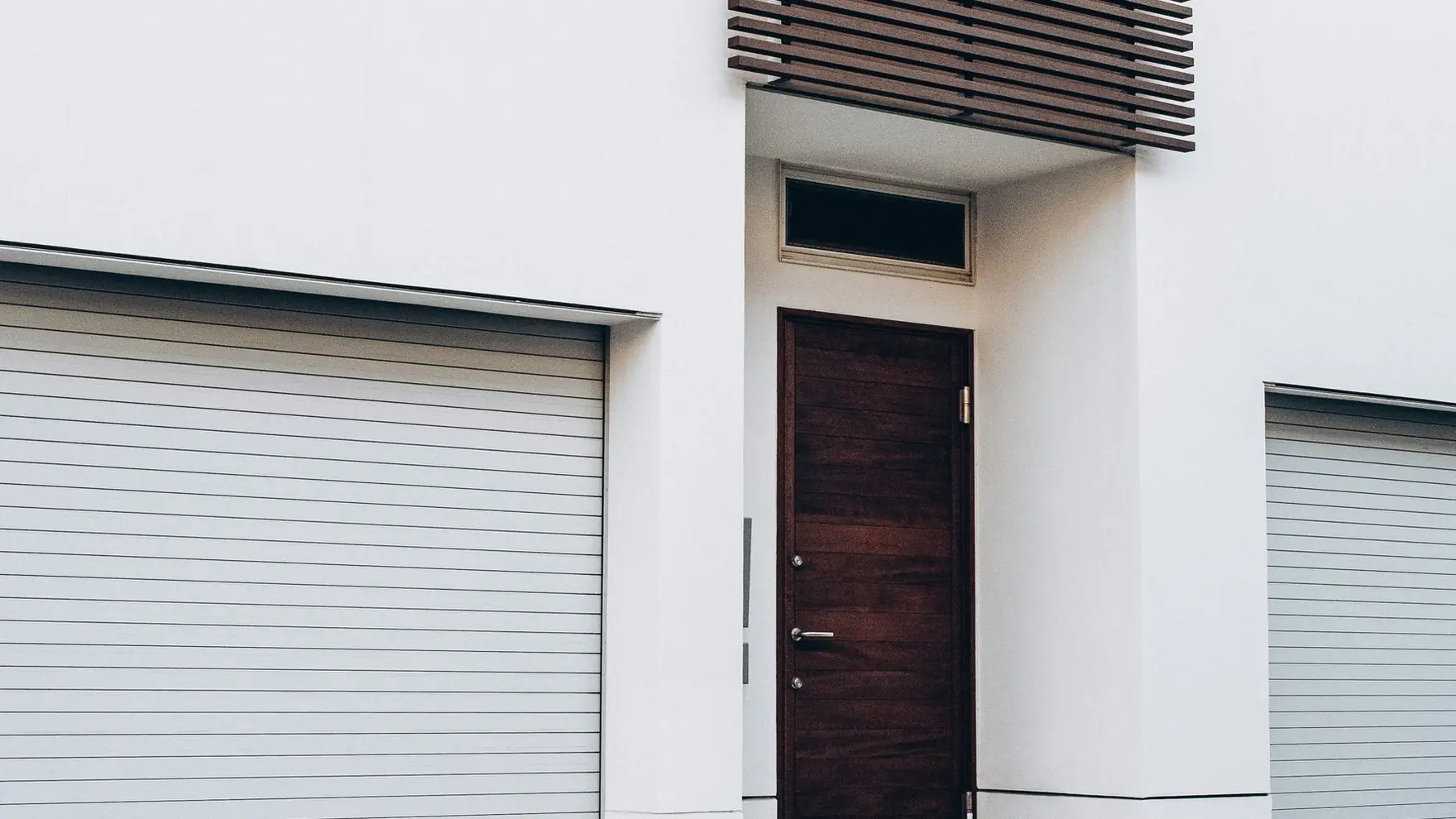
LiftMaster and Chamberlain, installed and programmed
Garage Door Opener Installation and Repair in DFW
Short answer
A garage door opener is the motor unit that drives the door, sold in chain, belt and direct-drive types and sized by horsepower to the weight of the door. Opener installation runs $150 to $350 in Dallas-Fort Worth, $100 to $300 when fitted alongside a new door, and $95 to $150 if serviced during a tune-up. Installations are completed in a single day.
The right opener is decided by your door's weight and your garage's ceiling, not by the price on the box.
Overview
This page covers garage door opener installation and repair in Dallas-Fort Worth: which drive type to buy, how to size horsepower to your door, what LiftMaster and Chamberlain actually differ on, whether battery backup is worth it in Texas, and what the work costs.
The pricing first, because nobody else in this market publishes it. Opener installation in DFW runs $150 to $350 for the installation line item. Connecting an opener to a newly installed door runs $100 to $300. An opener that burned out because it was run against a broken spring costs $525 to $3,000 to put right, which is the entire reason we tell people to stop pressing the button.
Professional Garage Concepts installs LiftMaster and Chamberlain openers across DFW, and we have been doing it since 2001, with 532 Google reviews at 4.8 stars and International Door Association certification. Call (817) 381-6173.
Belt, chain or wall-mount: how to pick
There are three drive types worth considering in a DFW home, and the choice comes down to where the garage sits relative to your bedrooms and what you want to do with the ceiling.
Belt drive uses a steel-reinforced rubber belt instead of a metal chain. It is the quietest of the two rail-mounted types by a wide margin, and it is the default recommendation for an attached garage, particularly one with a bedroom or bonus room above it. It costs more than chain and it is the upgrade most homeowners are glad they made.
Chain drive uses a metal chain on the rail. It is the least expensive, it is mechanically simple, and it is loud enough that you hear it through the house. On a detached garage, a shop, or a barn, chain drive is a perfectly rational purchase and the noise costs you nothing.
Wall-mount jackshaft openers mount on the wall beside the torsion shaft and drive the shaft directly. There is no rail and no motor over your head. That frees the entire garage ceiling for storage racks, a car lift, or a taller vehicle, and it is the answer when headroom is too tight for a conventional rail. It is the quietest option in the house because the motor is on the wall rather than suspended over the ceiling drywall. LiftMaster wall-mount units include an integrated deadbolt that throws into the track when the door is closed, which is a real security gain.
Screw drive openers still exist but have largely been displaced. We do not lead with them in a climate where the garage ceiling runs past 120F in August.
- Belt drive: quietest rail type, best for attached garages and rooms over the garage, mid to high cost.
- Chain drive: loudest, lowest cost, mechanically simple, fine for detached garages and shops.
- Wall-mount jackshaft: no ceiling rail, frees overhead space, works with low headroom, integrated deadbolt on LiftMaster models, highest cost.
- Any of the three can carry battery backup, myQ connectivity and a camera depending on the model.
Horsepower sizing by door weight
Horsepower is the number people shop on and the number they most often get wrong. What actually matters is the weight of your specific door and how many times a day it moves.
Half horsepower handles a light single-car door, typically a single-layer uninsulated steel door on a 8x7 or 9x7 opening. It is the builder-grade default and it is undersized for most of what it gets installed on.
Three quarter horsepower is the right answer for the large majority of DFW homes. A standard 16x7 double door with polystyrene insulation lands here, and so does a heavier single. This is the sizing we install most.
One to one and a quarter horsepower belongs on genuinely heavy doors: polyurethane insulated doubles, carriage-house doors with wood overlay, full-view aluminum and glass doors, and any oversized opening on a shop or RV bay.
Two things to know. First, most modern openers use DC motors rated in horsepower-equivalent rather than true horsepower, so compare lift capacity and duty rating rather than badge numbers across brands. Second, an undersized opener does not fail on day one. It fails in year three, after several Texas summers of pulling harder than it was built to, and it usually takes the drive gear with it.
LiftMaster and Chamberlain
These two brands come from the same manufacturer, which surprises most homeowners. The difference is the channel and the build.
Chamberlain is the retail line, sold in home improvement stores and online, supported through a consumer channel. LiftMaster is the professional line, sold through dealers and installers, generally built with heavier gearboxes, longer duty ratings and parts a technician can order and replace individually rather than replacing the whole head unit.
That last point is the practical one. When a dealer-line opener has a failure in year seven, there is usually a repair path: a gear kit, a logic board, a trolley, a rail section. When a retail unit fails at year seven, the repair path is frequently a new opener. Over a fifteen year ownership window that difference is worth more than the price gap at purchase.
We install and service both, and we carry LiftMaster parts on the trucks. If you have already bought an opener and want it installed, we will install it and tell you honestly what we think of the model.
- Same manufacturer, two channels: Chamberlain retail, LiftMaster professional.
- LiftMaster units are generally serviceable at the component level.
- We stock LiftMaster parts on the trucks, so common repairs finish in one visit.
- We will install a customer-supplied opener and set it up correctly.
Smart openers and myQ
Almost nobody in DFW has written anything useful about connected openers, so here is the practical version.
A myQ-equipped opener connects to your home wifi and pairs with a phone app. From the app you can see whether the door is open or closed, open or close it from anywhere, and get an alert when it moves or when it has been left open. Camera-equipped models add a live view and recorded clips of the garage. Keypads on the outside jamb give a code-based entry that does not require a remote at all.
Who this genuinely helps: households with kids who leave the door up, anyone who lets contractors, cleaners or dog walkers in, people who cannot remember whether they closed it, and anyone whose garage is the main entrance to the house. The left-open alert alone stops the most common cause of a garage burglary in a DFW neighborhood.
Being straight about subscriptions: basic app control and alerts come with the opener. Certain third-party and delivery integrations have carried a subscription fee, and those terms change from time to time. We tell you which features on the model you are considering are included and which are not, before you buy it.
A note on security worth knowing. Every opener made since the mid 1990s uses a rolling code, so the remote transmits a different code every press. If your opener still uses fixed DIP switches on the remote, it is old enough that the safety photo eyes are also questionable, and replacement is the right call.
Battery backup, and why it matters more in Texas
A battery backup opener has a rechargeable battery in the head unit that keeps the opener running when the power is out. For years this was treated as an optional extra. In North Texas it is one of the better fifty dollar decisions on the door.
The reason is our grid and our weather. February 2021 put much of Texas in the dark for days in freezing conditions. Summer heat waves strain the grid every year. Spring and fall storm cells knock out neighborhood power regularly, and ice storms do it in winter. In every one of those situations, an attached garage with a dead opener is a house whose main entrance stops working, with a car locked inside.
Yes, there is an emergency release. Pull the red handle and the door disconnects from the trolley so you can lift it by hand. Two problems with relying on that. A heavy insulated double door is a genuine lift for one person. And once the door is manually opened, it cannot be locked or powered closed, so you leave the garage open until the power returns.
A backup battery is a consumable. Expect to replace it every few years, sooner in a hot garage, because heat is what kills batteries. That is a small maintenance item against the value of having the door work during an outage.
- Keeps the opener working through a neighborhood outage or a statewide grid event.
- Matters most on attached garages that serve as the household's main entrance.
- Available across belt, chain and wall-mount lines.
- The battery is a wear part. Plan on replacement every few years in a hot Texas garage.
- We check backup battery condition during any annual tune-up.
Opener repair versus replacement
Most opener problems are not the motor, and most of them are cheap. Before anyone quotes you a new unit, the door itself needs to be ruled out.
Start with balance. Disconnect the opener at the trolley with the door closed and lift by hand. If the door is heavy, drops, or will not move, the problem is the springs and the opener is a victim, not a cause. Installing a new opener on an unbalanced door buys you a second dead opener.
Repair when the fault is a photo-eye alignment, a dirty sensor lens, a broken low-voltage wire, a dead remote, a failed wall console, a stripped drive gear on a serviceable unit, a worn trolley carriage, or a loose chain or belt. Every one of those is a parts-and-labor fix well below the cost of a new opener.
Replace when the motor is past 15 years, when the logic board is obsolete and unavailable, when the unit predates rolling codes or lacks working photo eyes, or when the opener burned out running against a broken spring. That last case runs $525 to $3,000 depending on the unit and what else it damaged on the way down.
There is also a good-reason-to-upgrade case that has nothing to do with failure. Moving from a fifteen year old chain drive to a belt drive or a wall-mount, on a house with a bedroom over the garage, changes the noise in that room immediately.
- Remote works, wall button does not: wall console or a break in the low-voltage wire.
- Wall button works, remote does not: battery or lost programming.
- Door reverses before it seals: photo-eye alignment, dirty lenses, or close-force setting.
- Motor runs and nothing moves: stripped drive gear or a sheared trolley.
- Opener cuts out mid-cycle: thermal overload, almost always from an unbalanced door.
- Nothing at all: power, GFCI outlet, or a failed logic board.
What an opener installation includes
The line item is $150 to $350 for opener installation in DFW, or $100 to $300 to connect an opener to a door we are installing new. Here is what is actually in that.
The old unit comes down and leaves with us. The new rail is assembled and the header bracket is mounted into structure rather than into drywall, which matters because that bracket takes the pull of every cycle. The head unit is hung on solid strut with the correct drop, not on whatever hangers were already there.
Photo eyes are mounted six inches off the finished slab, which is the height the safety system is designed around, and the wire is run and secured rather than left draped. Travel limits are set so the door seals against the threshold without pressing into it. Force is set in both directions and tested against an obstruction. Remotes, exterior keypad, wall console and the phone app are all programmed before we leave, and you get shown how the emergency release works and how to reset it.
One last check that gets skipped by most installers: the door gets a balance test first. We do not hang a new opener on a door that is out of balance, because that is the fastest way to be back at the same house in two years.
Why DFW garages are hard on openers
The ceiling of a North Texas garage in August is one of the hottest places in the house. Attic heat load sits directly above it, and the opener head unit hangs right in it. Heat degrades logic board components, thins gear grease and shortens battery life, and it is the reason openers here often do not reach the service life they would in a milder climate.
Dust is the second factor. North Texas wind puts fine grit in the rail and on the photo-eye lenses. Dirty lenses are the single most common cause of the reverse-before-close complaint we get in summer.
The third is the one nobody connects to the opener at all. Expansive Blackland Prairie clay moves slabs and framing, the door opening racks out of square, and the door begins to bind on one side. The opener has no way to tell you that. It just pulls harder every cycle until it fails, and the failure looks like an opener problem. It was a door problem the whole time. That is why every opener call we run starts with a hand balance test.
How it works
How an opener installation runs
- STEP 01
Sizing on the phone and in the garage
We ask about door size, insulation type, whether the garage is attached, whether there is a room above it, and what your ceiling headroom looks like. That narrows the drive type and horsepower before we arrive.
- STEP 02
Balance the door first
The tech disconnects and hand-tests the door before anything gets installed. If the springs are worn or the door is out of square, that gets addressed first, because a new opener on an unbalanced door is a short-lived opener.
- STEP 03
Remove and mount
The old unit and rail come down and leave with us. The new header bracket goes into structure, the rail is assembled, and the head unit is hung on solid strut with the correct drop.
- STEP 04
Wire, set and test
Photo eyes are mounted six inches off the slab and wired in, travel limits are set so the door seals without pressing, and force is set and tested in both directions against an obstruction.
- STEP 05
Program everything and hand it over
Remotes, exterior keypad, wall console and the phone app are programmed and tested. You get shown the emergency release, how to re-engage it, and where the backup battery lives. Typical install time is about two hours.
Straight pricing
Garage door opener pricing in DFW
These are DFW market ranges for the work, and the opener itself varies by drive type, horsepower and features. We give you the total in your driveway before we start, with the unit price and the labor shown separately.
Opener installation
$150 to $350installation, on an existing door
Replacing a failed or obsolete opener on a door that is in good shape
- Old unit removed and hauled off
- Rail assembly and header bracket into structure
- Photo eyes mounted and wired at 6 inches
- Travel and force set, safety reverse tested
- Remotes, keypad, wall console and app programmed
Opener connected to a new door
$100 to $300added to a door installation
Keeping a good opener when you replace the door, or adding one to a new install
- Opener reconnected and re-railed to the new door
- Travel limits reset to the new door height
- Force reset to the new door weight
- Sensors relocated and re-tested
Opener service during a tune-up
$95 to $150per door, as part of the annual tune-up
An opener that works but has started hesitating, reversing or running loud
- Chain or belt tension set
- Travel and force recalibrated
- Photo eyes cleaned and realigned
- Backup battery condition checked
- Rail and trolley lubricated
Replacement after a spring-related burnout
$525 to $3,000installed, depending on the unit and collateral damage
Openers destroyed by running against a broken spring. This is the number that explains why we say stop pressing the button
- New opener sized to the door
- Spring and cable repair addressed at the same time
- Door rebalanced before the opener is hung
- Full safety test on both systems
Answers
Frequently asked questions
Still stuck? Call (817) 381-6173 and talk to someone who does this every day.
Do you offer garage door opener installation and repair?
Yes. Professional Garage Concepts installs and repairs LiftMaster and Chamberlain garage door openers across the Dallas-Fort Worth metroplex, including belt drive, chain drive and wall-mount jackshaft units. Installation runs $150 to $350 in DFW, or $100 to $300 to connect an opener to a new door. We carry LiftMaster parts on the trucks, so most repairs finish in one visit.
Do I need a smart opener?
You need one if anyone in the house forgets to close the door, if you let contractors, cleaners or deliveries in while you are out, or if the garage is your main entrance. A myQ-equipped opener shows the door's status in an app, opens and closes it from anywhere, and alerts you when it has been left open. Basic app control comes with the opener. Some third-party integrations carry a subscription, and we tell you which before you buy.
Why is my garage door remote not working?
Start with the battery, which is the cause well over half the time, then check whether the wall button still operates the door. If the wall button works and the remote does not, the remote has lost its programming or failed. If neither works, the problem is at the opener or its power. If the remote works up close but not from the driveway, the antenna wire hanging from the head unit is damaged or tucked up.
Belt drive or chain drive, which should I get?
Choose belt drive for an attached garage, especially one with a bedroom or bonus room above it. A steel-reinforced rubber belt runs far quieter than a metal chain and is the upgrade most homeowners say they would make again. Choose chain drive for a detached garage, shop or barn, where the noise costs you nothing and the lower price is real. Both carry the same safety systems and both can be had with battery backup and myQ.
What horsepower garage door opener do I need?
Three quarter horsepower fits the large majority of DFW homes, including a standard 16x7 double door with polystyrene insulation. Half horsepower suits only a light single-layer single door. Step to one horsepower or higher for polyurethane insulated doubles, carriage-house doors with wood overlay, full-view aluminum and glass doors, and oversized shop or RV openings. Undersized openers rarely fail immediately. They fail in year three, usually taking the drive gear with them.
Is a wall-mount jackshaft opener worth it?
It is worth it in three situations: when you want the garage ceiling clear for overhead storage racks or a car lift, when headroom above the door is too tight for a conventional rail, and when noise in a room above the garage is the deciding factor. A jackshaft mounts on the wall beside the torsion shaft, so no motor hangs over your head. LiftMaster wall-mount models also include an integrated deadbolt that locks the door in the track.
Do I need battery backup on a garage door opener in Texas?
It is one of the better small upgrades available in North Texas. Grid strain in summer, ice storms in winter and storm cells in spring all take neighborhood power down, and an attached garage with a dead opener is a main entrance that stops working with a car locked inside. The manual release is a real fallback, but a heavy insulated double door is a genuine lift and it cannot be secured once opened by hand.
How much does garage door opener installation cost in Dallas-Fort Worth?
Opener installation in DFW runs $150 to $350 for the installation itself on an existing door, and $100 to $300 to connect an opener to a newly installed door. The opener unit is priced separately and varies by drive type, horsepower and features such as battery backup, myQ and a built-in camera. We show the unit price and the labor as separate lines before we start.
Should I repair or replace my garage door opener?
Repair when the fault is a sensor alignment, a dirty lens, a broken low-voltage wire, a dead remote, a failed wall console, a stripped gear on a serviceable unit, or a loose chain or belt. Replace when the motor is past 15 years, the logic board is obsolete, the unit predates rolling codes or working photo eyes, or the opener burned out running against a broken spring. Check door balance first, because an unbalanced door kills openers.
What brands of garage door openers do you install?
We install and service LiftMaster and Chamberlain openers throughout DFW. Both come from the same manufacturer. Chamberlain is the retail line and LiftMaster is the professional dealer line, generally built with heavier gearboxes and parts that can be replaced individually instead of replacing the whole head unit. We stock LiftMaster parts on the trucks, and we will also install a customer-supplied opener and set it up correctly.
By city
Garage Door Openers near you
Related services
Garage Door Repair
Broken spring, snapped cable, door off track, dead opener. We diagnose the actual fault in your driveway, give you the price before we start, and carry the common parts on the truck.
Learn moreSpring Repair
We replace springs across DFW with cycle-rated steel sized to your door's measured weight, usually inside 90 minutes. Torsion runs about $200 to $400 per spring installed, and we tell you that before we start.
Learn moreRepair & Maintenance
One visit a year: every moving part inspected, adjusted and lubricated, the door rebalanced by hand, and both safety reverse systems tested. $95 to $150 per door in DFW.
Learn moreNew Door Installation
Published DFW pricing, real material options you can touch in our showrooms, wind-rated construction for North Texas storms, and the old door hauled off before we leave.
Learn moreResidential Garage Doors
Repair, springs, openers and new doors across the Metroplex. 532 Google reviews at 4.8 stars, IDA certified technicians, and two showrooms where you can put your hand on the actual door.
Learn moreReady to get garage door openers handled?
Call (817) 381-6173 or send the form. We answer quote requests the same business day, and we have been doing this across DFW since 2001.