
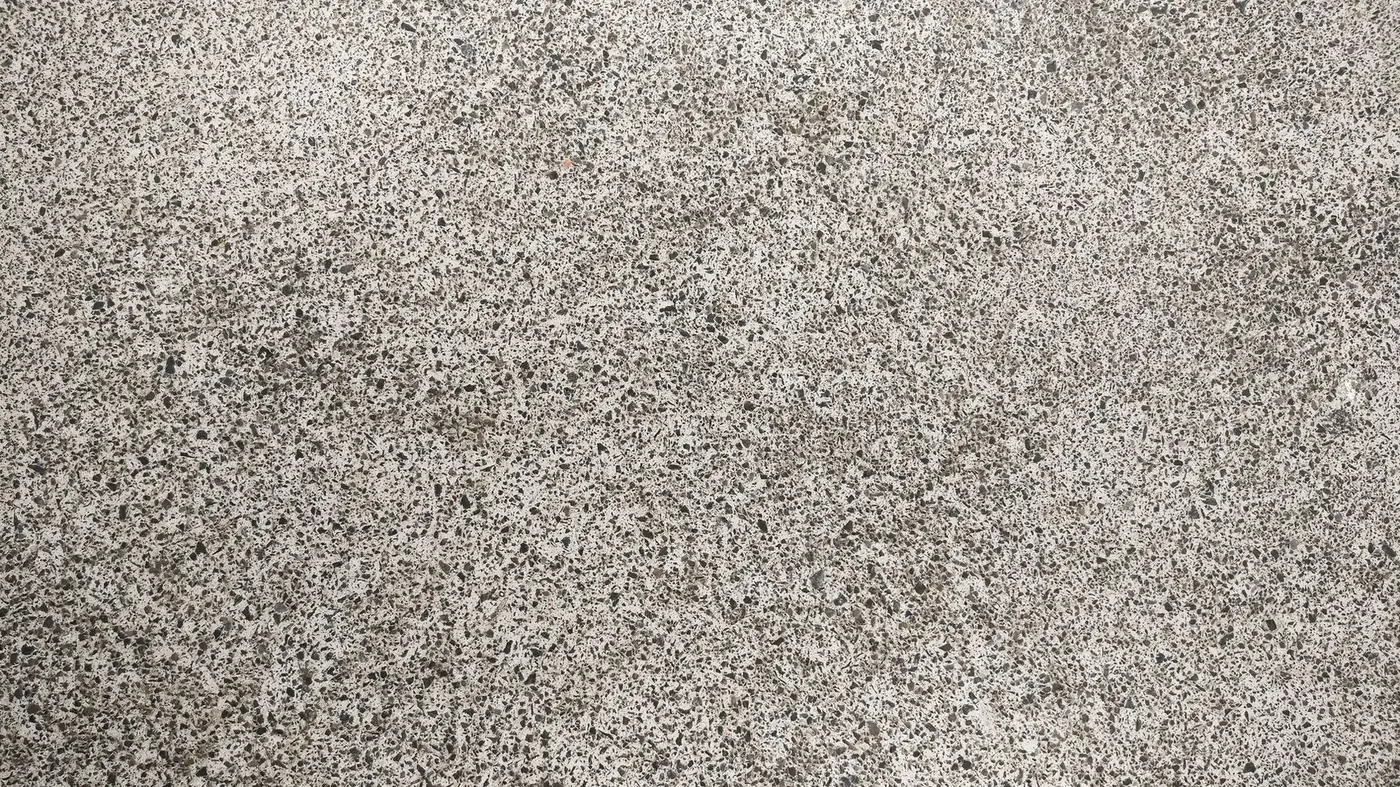
Decorative and Industrial Concrete
Concrete Floor Services in Dallas and Fort Worth
Short answer
Professional Garage Concepts finishes existing concrete slabs across Dallas and Fort Worth four ways: mechanically polished, stained or dyed, sealed, and coated for industrial duty. Sealed concrete runs $1.50 to $4 per square foot installed in Dallas-Fort Worth. Most jobs finish in a single day.
You already paid for the floor. Stop covering it up.
Overview
Professional Garage Concepts finishes existing concrete slabs across Dallas and Fort Worth four ways: mechanically polished, stained or dyed, sealed, and coated for industrial duty. Every one of those starts with the slab you already have. Nothing here is poured new, and nothing here is a covering laid on top of a floor you paid for once already.
We have worked on DFW floors since 2001. The company holds 532 Google reviews at a 4.8 star average, an A+ rating with the BBB, and is licensed, bonded and insured. Our commercial client list includes Herzog and Coca-Cola. We run two showrooms, at 220 N Main Street in Keller and 801 Greenview Drive in Grand Prairie, so you can put a hand on a finished sample before you sign anything. Every other concrete contractor in this metroplex asks you to pick a finish from a photograph.
This page routes you to the right finish. If you already know what you want, jump to polished concrete, concrete staining, sealed concrete or industrial coatings. If you do not, read the comparison below. The wrong finish on the right slab is the most expensive mistake in this trade, because removing a failed coating costs $1.00 to $3.00 per square foot before the real work starts.
Four finishes, four different jobs
These are not four grades of the same product. They are four different things done to concrete, with different equipment, different timelines and different failure modes. Picking between them is a question about traffic, chemicals, appearance and what your slab will physically allow.
Here is the honest short version of each.
- Polished concrete. Diamond grinding through a sequence of grits until the slab itself becomes the finished surface. Nothing is added on top except a densifier that soaks in and a stain guard. It cannot peel, because there is no film to peel. Best for showrooms, retail, offices, warehouses, and homes where the slab is sound.
- Stained or dyed concrete. Acid stain reacts with the lime in the slab and produces mottled, variable color. Water-based dye lays in more evenly and hits colors acid cannot. Both need a sealer or a polish over the top to survive traffic. Best for patios, entries, living areas, restaurants and any floor where you want color instead of gray.
- Sealed concrete. A penetrating silane or siloxane that soaks in and repels water and salt, or a topical film that sits on the surface and adds sheen. This is the cheapest thing you can do to a slab and the right answer for driveways, patios, warehouse floors that only need dust control, and any exterior concrete facing Texas freeze and thaw.
- Industrial coatings. Urethane cement, novolac epoxy, static dissipative systems and heavy-build epoxy or polyaspartic, chosen for a specific chemical, thermal or electrical problem. Best for food and beverage plants, manufacturing, automotive service bays, warehouses and any floor that gets hot washed, hit with acid, or driven on by loaded lifts all day.
How to pick, in the order the decision actually happens
Most people start with a photograph and work backward. That is the wrong direction, and it is why so many DFW floors get a finish the slab cannot support. Start with the slab, then the use, then the look.
Walk your floor and answer these five questions before you call anyone. If you can answer them, we can usually give you a real number over the phone.
- What is on it now? Bare concrete, tile, carpet glue, vinyl, old paint or an old coating. Anything that is not bare concrete has to come off, and demolition runs $1.00 to $3.00 per square foot depending on how stubborn it is.
- Is it inside or outside? Exterior concrete in Texas gets UV, thermal cycling and standing water. That rules out most topical films and pushes you toward a penetrating sealer or a UV stable system.
- Does it get wet, hot or chemical? Washdown, steam, hydraulic fluid, battery acid and brine each disqualify a different system. This single question decides the industrial spec.
- How much square footage? Concrete finishing prices are strongly size-dependent because mobilization and setup cost the same on 600 square feet as on 6,000. A 600 square foot salt and pepper polish prices near $9.00 per square foot. The same finish at 5,000 square feet prices from $3.50.
- Can you give up the floor for a few days, and when? Grinding is loud and dusty. Coatings need cure time. For a working building, the schedule is usually a bigger constraint than the price.
What DFW slabs do to a concrete floor
Dallas and Fort Worth sit on Blackland Prairie clay, which swells when wet and shrinks when dry. That soil moves under every slab in this metroplex, and it is the reason concrete floors here behave differently than the same floor in Phoenix or Denver. Any contractor who talks about your floor without talking about your soil is selling you a finish and not a floor.
Three things follow from that. First, control joints and cracks move seasonally, so joint fill has to be chosen for movement rather than just filled and forgotten. Second, many DFW slabs are post-tensioned, which limits how aggressively we can grind and where we can drill or cut, and we verify tendon layout before any deep cut. Third, slab moisture matters more than people expect. Vapor driving up through a slab on grade will push a film-forming coating off the concrete, sometimes a year later, which is exactly why a polish or a penetrating sealer is often the safer specification on a slab with an unknown or missing vapor barrier.
We test moisture before we quote a film-forming system on any interior slab where the vapor barrier is unknown. If the reading comes back high, we tell you before you spend money, not after the coating blisters.
- Expansive clay soils that move the slab seasonally, so joints and cracks are treated as moving elements
- Post-tension slabs, common in DFW residential construction, which limit grind depth and cutting
- Slab moisture vapor emission on older slabs with no vapor barrier under them
- Surface temperatures over 100 degrees in an uncooled DFW garage or warehouse, which affects cure and pot life
- Hot tire pickup from vehicles that have been sitting in Texas summer heat, which is a coating problem and not a polished concrete problem
Industries we finish concrete for
The right system changes completely depending on what happens on the floor. A retail floor and a food plant floor are both concrete, and almost nothing else about them is the same. These are the five categories most of our concrete work falls into.
- Commercial. Offices, medical and dental suites, gyms, churches, breweries, salons and tenant finish-out across Dallas and Fort Worth. Usually a polished slab or a stain and polish combination, scheduled around a certificate of occupancy date. We coordinate with the general contractor and hit the date on the schedule.
- Residential. Living areas, kitchens, basements, patios, sunrooms and garages in DFW homes. Post-tension slabs and small square footages drive both the method and the price. Residential jobs are where cream polish and acid stain do their best work, and where the showroom sample matters most.
- Manufacturing. Plant floors, machine shops, fabrication bays and process areas. This is urethane cement and novolac epoxy territory, specified around thermal shock, chemical exposure and point loading from equipment, with safety striping laid out to match your traffic plan.
- Warehousing and distribution. Distribution centers, cold storage, 3PL space and racked warehouse floors across the DFW logistics corridor. Densify and polish is the low-cost, high-durability answer for most of this square footage, with joint fill under lift traffic and striping for aisles, racking and pedestrian walkways.
- Retail. Storefronts, showrooms, restaurants, grocery and big-box space. Polished concrete carries the highest reflectance and the lowest lifetime maintenance cost of anything you can put down, and it is the reason so many national retail brands specify it by default.
One contractor for the floor, the door and everything between
We are a garage and building envelope contractor that also finishes concrete. That combination is unusual in DFW, and it matters more than it sounds. If you are polishing a shop floor, you probably also need the overhead door serviced, the dock leveler looked at, or cabinets and storage put in against the wall. Running those as separate vendors means separate schedules, separate warranties and two crews pointing at each other when something does not line up.
We do doors, gates, floor coatings, decorative concrete, cabinets and slat wall with our own people. One point of contact, one schedule, one warranty conversation. No DFW competitor offers that whole list, which is the entire reason we built the company this way.
And we have showrooms. Both locations hold real finished samples: a polished panel you can see under real light, actual flake blends, stain samples on real concrete rather than on a printed card. Concrete color does not photograph accurately, ever. Come look at it.
What we need before we can quote
A concrete quote that is not based on a site visit is a guess. We do site visits, and for commercial work we return most estimates within a couple of business days once we have walked the floor.
For a fast phone estimate, have this ready: approximate square footage, what is currently on the floor, interior or exterior, the building age if you know it, and what happens on that floor day to day. For commercial and industrial work, also tell us your shutdown window and whether the building will be occupied while we work. That last item changes the price more than any finish selection does.
- Square footage, even rough, and the shape of the space
- Current floor condition and any existing covering or coating
- Known cracks, spalls, low spots or previous repairs
- Whether the slab is post-tensioned
- Interior or exterior, conditioned or unconditioned
- Chemical, thermal or washdown exposure for industrial floors
- Your date, and whether nights or weekends are an option
How it works
How a concrete floor job runs from first call to walk-through
- STEP 01
Site visit and slab assessment
We come out and look at the actual concrete. We check flatness, existing coverings, cracks, joints, spalling and how deep the cream layer runs, and on interior slabs with an unknown vapor barrier we test for moisture. This visit decides what is possible, not just what is preferred.
- STEP 02
Written scope and finish selection
You get a written scope naming the exact system, the finish level, the joint treatment and the square footage. Finish selection happens at the showroom or on your own slab with a test patch. Test patches are the only way to know how a specific stain will read on a specific floor.
- STEP 03
Demolition and surface preparation
Old flooring, adhesive, paint and failed coatings come off first. Prep runs from a light diamond grind for a penetrating sealer to a full shot blast for a heavy industrial buildup, and it is the single largest predictor of whether a floor lasts. Nobody wins an argument with bad prep.
- STEP 04
Crack, joint and spall repair
Cracks are chased out and filled, spalls are patched, and control joints are cleaned and filled with the right material for the movement they see. On DFW slabs sitting on expansive clay, joints get a semi-rigid fill in traffic areas and a flexible sealant where the slab actually moves.
- STEP 05
Dust containment and protection
We wall off the work area with plastic and run HEPA vacuums on the grinders. In occupied buildings, adjacent finishes, racking, equipment and doorways get protected before a machine turns on. Ram Board or equivalent floor protection is available where trades follow us.
- STEP 06
The finish itself
Grinding and polishing through the grit sequence, stain or dye application, sealer application, or coating buildup, depending on the system. This is the part everyone pictures, and it is usually the shortest phase of the job.
- STEP 07
Protection and cure
Polished floors get a densifier and a stain guard. Stained floors get a sealer. Coated floors get their topcoat and then their cure time, which is where the schedule usually lives. We give you a written return-to-service time for foot traffic and for vehicles or equipment, and they are not the same number.
- STEP 08
Walk-through and maintenance handoff
We walk the floor with you in the light you will actually live with, correct anything that needs correcting, and hand over a written maintenance routine. For polished floors that means the right pH neutral cleaner and nothing acidic. For coatings it means what to keep off the surface and when to look at the topcoat again.
Straight pricing
What concrete floor finishes cost in DFW
These are installed DFW ranges, not quotes. Concrete pricing is strongly size-dependent because setup costs the same on a small floor as on a large one, so a small residential job prices near the top of every band and a large commercial floor prices near the bottom.
Sealed concrete
$1.50 to $4per sq ft
Driveways, patios, warehouse floors that need dust control, exterior slabs facing Texas UV and freeze cycles
- Cleaning and light surface prep
- Penetrating silane or siloxane, or a topical film sealer
- Optional slip resistant additive in the topcoat
- Crack and joint attention where required
Polished concrete
$3.50 to $12per sq ft
Retail, offices, warehouses, showrooms and homes where the existing slab is sound
- Cream polish from $3.50 to $6.00 per sq ft
- Salt and pepper from $3.50 per sq ft at 5,000 sq ft, near $9.00 at 600 sq ft
- Rock cut and full aggregate exposure $9.50 to $12.00 per sq ft
- Lithium densifier and stain guard included in every polish
Stained and dyed concrete
$2 to $8per sq ft
Patios, entries, living areas, restaurants and any floor that needs color instead of gray
- Basic acid stain or dye $2.00 to $4.00 per sq ft
- Dye added to a polish $1.00 to $2.00 per sq ft
- Saw cut scoring patterns $3.00 to $5.00 per sq ft
- Custom designs, borders and logos $5.00 to $15.00 per sq ft
Industrial coatings
$5 to $12+per sq ft
Warehouses, manufacturing, food and beverage, automotive service and any floor with a chemical or thermal problem
- Epoxy and polyaspartic systems in the $5 to $12 per sq ft band
- Urethane cement and novolac epoxy quoted by system above that band
- Line striping and safety marking quoted with the coating scope
- Night, weekend and phased shutdown scheduling available
Answers
Frequently asked questions
Still stuck? Call (817) 381-6173 and talk to someone who does this every day.
What concrete floor services do you offer in Dallas and Fort Worth?
We polish, stain, dye, seal and industrially coat existing concrete slabs throughout Dallas and Fort Worth. That covers mechanically polished concrete, acid stain and water-based dye, penetrating and topical sealers, and heavy-duty systems like urethane cement and novolac epoxy for plants and warehouses. We do not pour new slabs.
Most of our work is finishing concrete that is already in place, whether that is a 400 square foot patio in Keller or a 40,000 square foot distribution floor in Grand Prairie.
How much do concrete floors cost per square foot in DFW?
Concrete floor finishes in DFW run roughly $1.50 to $12 per square foot installed, depending on the system and the size of the floor. Sealing sits at the low end, polished concrete runs $3.50 to $12, staining adds $2 to $8, and industrial coatings start around $5 and climb with the spec.
Size moves the number more than the finish does. Mobilization costs the same on 600 square feet as on 6,000, so small residential jobs price near the top of every band.
Should I polish my concrete or coat it?
Polish the slab if it is structurally sound and you want a floor that cannot peel, because polished concrete has no film on top to delaminate. Coat it if you need chemical resistance, thermal shock resistance, a specific color, or if the slab is too damaged or too wet for polishing to look right.
On a Dallas garage that gets hot tires in July, a polished or properly specified polyaspartic floor both work. A cheap big-box epoxy kit does not.
Can you finish concrete in an occupied Dallas building?
Yes. We wall off work areas in plastic, run HEPA dust collection on every grinder, and schedule noisy phases for nights or weekends when the building has to keep operating. Most commercial and industrial floors we do in DFW are phased so only part of the space is out of service at a time.
Tell us your operating hours on the first call. It changes the sequencing, and it is easier to plan for than to work around later.
Does the Blackland Prairie clay under DFW slabs affect a concrete floor finish?
Yes. The expansive clay under Dallas and Fort Worth swells and shrinks with moisture, which moves slabs seasonally and opens control joints and cracks. That is why we treat joints as moving elements and choose a semi-rigid fill for traffic areas and a flexible sealant where the slab genuinely moves.
It also means no honest contractor here will promise that an existing crack will never show again. We repair, we blend, and we tell you what to expect.
How long does a concrete floor job take?
A typical residential polished or stained floor takes two to four working days on site. Sealing a driveway or patio is usually one day. Warehouse and industrial coating work runs longer and is normally phased across nights or weekends so production keeps running.
Cure time is separate from work time. We give you a written return-to-service date for foot traffic and a later one for vehicles.
Do you have a showroom where I can see concrete finishes in person?
Yes, two of them: 220 N Main Street, Suite A in Keller and 801 Greenview Drive in Grand Prairie. Both hold real finished concrete samples you can look at under real light rather than photographs. Concrete color and gloss do not photograph accurately.
Every ranking concrete contractor in DFW asks you to choose from a website gallery. We would rather you put your hand on it first.
Can you do the floor and the garage door on the same project?
Yes, and it is the reason most customers call us instead of two contractors. We install and service garage doors, driveway gates, floor coatings, decorative concrete, cabinets and slat wall with our own crews, so one company schedules the whole job and stands behind all of it.
We have been doing this in DFW since 2001 and hold 532 Google reviews at 4.8 stars.
Related services
Polished Concrete
We grind your existing slab through a diamond grit sequence until the concrete itself is the finished surface. Densified, joint filled, stain guarded, and priced by the square foot before you commit.
Learn moreConcrete Staining
Reactive acid stain and water-based dye on existing DFW concrete, sealed or polished for traffic. We test on your slab before we commit, because your slab decides how the color reads.
Learn moreSealed Concrete
Penetrating silane and siloxane sealers that repel water from inside the concrete, or topical films that add sheen and stain resistance. We specify by exposure, not by habit.
Learn moreIndustrial Coatings
Urethane cement, novolac epoxy, static dissipative systems, striping and containment for DFW warehouses and plants. We work nights, weekends and phased shutdowns so production keeps running.
Learn moreGarage Floor Coatings
We grind the slab down to clean concrete, fix what is broken, and put down a coating system matched to your floor and how you use it. Two DFW showrooms where you can hold the real samples.
Learn moreReady to get concrete services handled?
Call (817) 381-6173 or send the form. We answer quote requests the same business day, and we have been doing this across DFW since 2001.